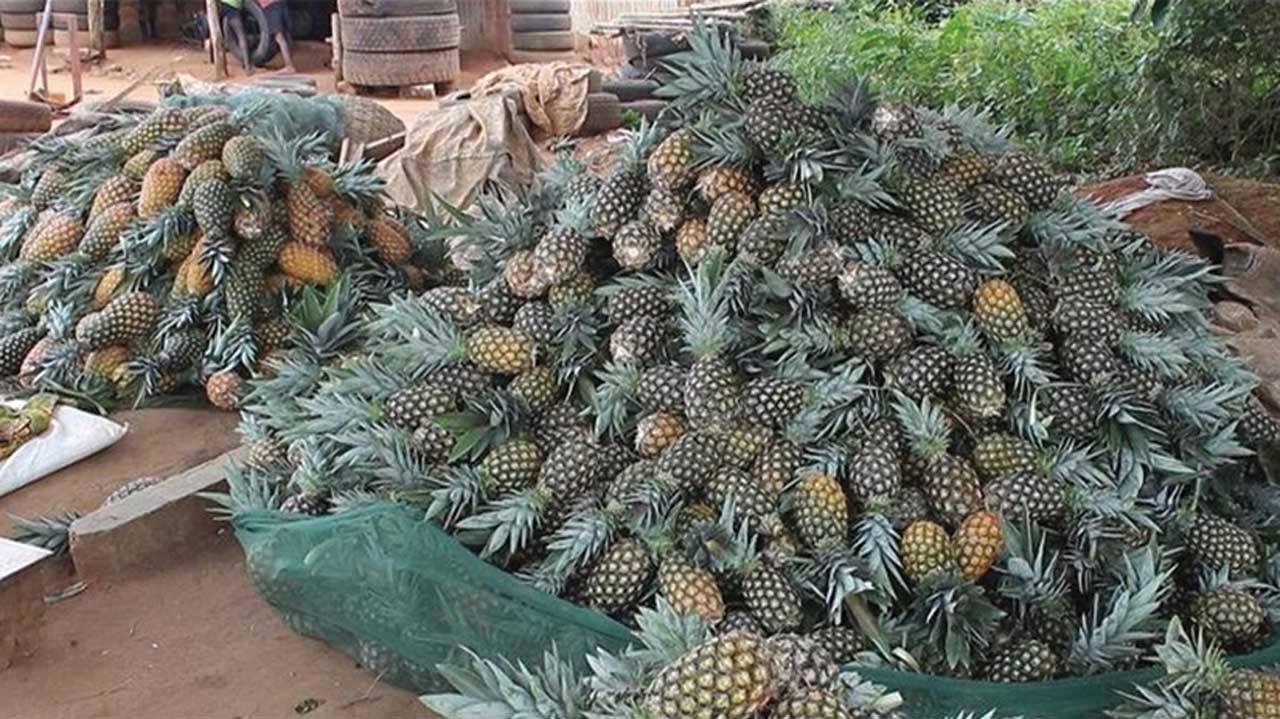
Nigeria is losing huge foreign exchange (FX) cash in the global pineapple market because of the country’s dependence on raw export of the produce as the only revenue source, according to a farmers’ group that specializes in pineapple growing, processing and marketing.
Currently, the global market value of the pineapple market is estimated at approximately $27.08 billion. Nigeria produces 1.54 million tons yearly, but huge portion of this annual produce is being destroyed by poor post-harvest management.
The Middle East’s processed fruit market, driven by consumer demand for juices, canned varieties, and dried snacks, is projected to grow at a Compound Annual Growth Rate (CAGR) of 5.3 per cent through next year. Major importers such as the United Arab Emirates (UAE) and Saudi Arabia are spending millions of dollars on fresh fruit and juice.
The Chairman, Board of Trustees, National Pineapple Growers, Processors and Marketers Association of Nigeria, Okekunle Akintunde, said the economy is losing due to the inability of growers to process pineapple leaving unimaginable wealth on the farm.
“What Nigeria loses annually to post-harvest waste in the pineapple subsector can significantly boost gross domestic product (GDP)if properly managed,” Akintunde stated, adding that the farmers were losing because they lacked the modern infrastructure to preserve and process the fruit.
According to him, the highest profits often lie in the processed, value-added products. Internationally, he said growers receive attractive prices for juice-grade fruit, adding that at certain market levels, it is more profitable to sell to processors than to the fresh export market.
He advocated that it was time to reposition Nigeria to become the world’s leading hub for processed pineapple, with lucrative opportunities opening in Europe and the Middle East.
“Pineapple is a very, very lucrative because it is a tropical crop that is needed by the whole world but cannot be planted in the whole world,” Akintunde explained. Reminiscing on a 2019 trip to the UK, he observed that he discovered that all European pineapples were imported from places such as Costa Rica and Hawaii, driving the price of a single fruit up substantially.
Akintunde noted, however, that the financial scale of the investment required, and the corresponding profit potential, is immense. He recalled the equipment required to compete at this level: “The machine to produce raw juice—no concentrate, no additive, was around N180 million when I saw it in the UK in 2019. There is no single person that is producing raw pineapple juice in Nigeria.”
Akintunde noted that the nation’s path to capitalising on the global pineapple market is clear: reduce post-harvest waste by investing in modern storage and cold-chain infrastructure, and aggressively pursue the processing opportunity that will transform tons of perishable fruit into high-value export commodities. This strategic shift is the only way to ensure that Nigeria’s massive pineapple output finally translates into massive national wealth.
He described pineapple as a crop with high returns from low investment. “You bury a sucker worth N200 in the ground and get N2000 at harvest. The potential profit margin is striking, especially when considering the species ‘Smooth Cayenne,’ the biggest fish of pineapple. While the initial cost of a sucker is around N150 to N200, the resulting fruit can command a price of N1,000 to N1,500 naira per one,” and sometimes even N2,000 “depending on the location,” Akintunde explained.
He pointed out that while planting the ‘crown’ (the leafy top of the fruit) can take up to three years to fruit, using a ‘sucker’ (a shoot from the mother plant) significantly cuts down the waiting time. “If you plant sucker within two years… before exactly two years, it must fruit,” he stated.
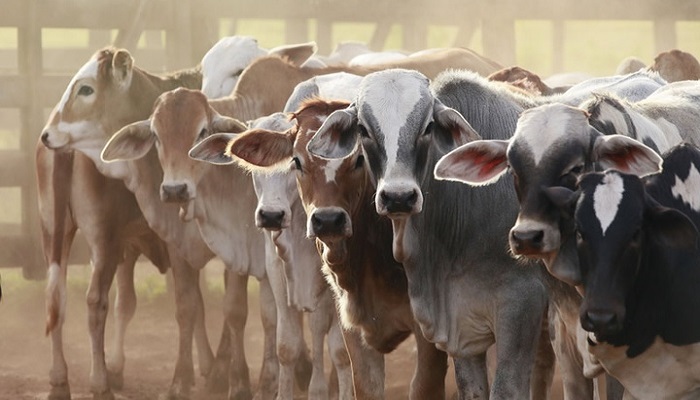
Akintunde revealed a simple, cost-effective way to secure farms from grazing cattle. “One of the benefits of pineapple is that cow doesn’t enter such plantation. The reason is the plant’s anatomy. The body of pineapple is surrounded with thorns, and the cow cannot use naked skin to penetrate the farm. This characteristic makes it an ideal natural barrier. “It’s one of the crops that if you plant cassava, you take like two or three rows, you plant pineapple around your farm. The cow will not be able to enter the farm. they will fear the pineapple because immediately they enter, it will choke them,” he advised.