
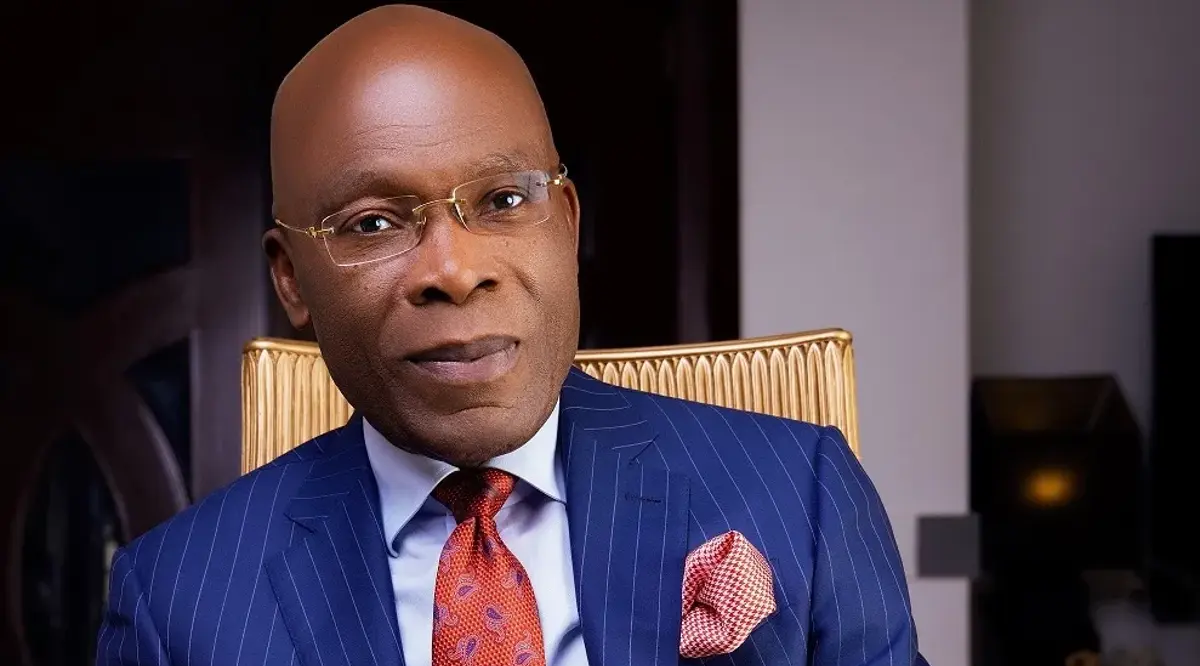
At 70, Leo Stan Ekeh stands as one of Africa’s most consequential technology pioneers—a man whose life’s work has transcended business to shape policy conversations, empower communities, and inspire a generation of entrepreneurs. Marking his 70th birthday is not merely a celebration of years; it is a celebration of purpose fulfilled, battles fought, and a vision relentlessly pursued, writes Lucas Ajanaku, publisher/editor-in-chief, themorningstar.com.ng.
As Scripture reminds us: “The days of our years are threescore years and ten” (Psalm 90:10). Reaching 70 is biblically symbolic—a milestone of wisdom, reflection, and enduring strength. In his case, it is not a sunset but a summit—an elevation from which the landscape of impact is clearly visible.
Vision rooted in faith, foresight
The story of Leo Stan Ekeh is, at its core, the story of vision. Long before digital transformation became the language of policymakers and corporations, he discerned the inevitable centrality of technology to economic development. Where others saw uncertainty, he saw possibility.
The Bible declares, “Where there is no vision, the people perish” (Proverbs 29:18). His life demonstrates the converse: where there is vision, people prosper. Like the wise builder in Luke 6:48 who “laid the foundation on a rock,” he built enterprises anchored in structure, governance, and long-term strategy.
Aristotle wrote, “We are what we repeatedly do. Excellence, then, is not an act, but a habit.” The arc of Ekeh’s career reflects that discipline of excellence—steady, deliberate, and enduring.
Building institutions that outlive founder
True leaders do not merely build businesses; they build institutions. Over decades, Ekeh invested in structures designed to endure beyond personality and circumstance. In doing so, he exemplified the biblical principle of stewardship.
In the Parable of the Talents (Matthew 25:14–30), the servants who multiplied what was entrusted to them were commended. His life mirrors that multiplication mindset—taking opportunities, nurturing them, and expanding their reach for the benefit of many.
Johann Wolfgang von Goethe observed, “Whatever you can do or dream you can, begin it. Boldness has genius, power, and magic in it.” That boldness characterized his pioneering decisions in Nigeria’s ICT ecosystem.
But boldness without integrity is fragile. The Scriptures caution, “A good name is rather to be chosen than great riches” (Proverbs 22:1). Across decades of enterprise, his reputation for principle has remained intact—an achievement as significant as any corporate milestone.
Personal testament of quiet generosity
While much can be written about boardrooms and policy influence, some of the most powerful stories are deeply personal—and often unknown to the benefactor himself.
I recall a particular season in my life when financial pressure weighed heavily on my family. Rent had become due. Deadlines had passed. The subtle reminders from my landlord were gradually hardening into threats of public embarrassment. For any head of a household, the thought of public shame—of belongings displayed outside, of dignity compromised—is a quiet terror.
Around that time, there was a virtual engagement with ICT reporters. After the call, in a gesture that seemed routine to him, Leo Stan Ekeh extended financial appreciation to every ICT reporter present. In his character, it was not announced with fanfare. It was not framed as charity. It was simply generosity—professional respect expressed tangibly.
What he did not know was that the cash I received that day became my lifeline.
That unexpected intervention enabled me to settle my rent just in time. It shielded my family from humiliation. It restored my peace. It preserved my dignity. He may never have known the depth of impact that single act carried, but to me, it was nothing short of providential.
Scripture says: “Give and it shall be given unto you; good measure, pressed down, and shaken together, and running over” (Luke 6:38). That day, his giving overflowed beyond its immediate intent. It did more than support a professional—it rescued a household.
The American essayist Ralph Waldo Emerson once wrote, “You cannot do a kindness too soon, for you never know how soon it will be too late.” His timely generosity came at the precise moment it was needed most.
Technology as tool for empowerment
Ekeh’s belief in technology has never been limited to profit margins. For him, ICT is a tool of liberation—economic, educational, and social.
Francis Bacon famously declared: “Knowledge is power.” In today’s digital age, access to technology is access to opportunity. By democratizing ICT distribution and advocating for local participation, he has helped position Nigeria not merely as a consumer of innovation but as a contributor.
The Bible reinforces this emphasis on wisdom: “Wisdom is the principal thing; therefore get wisdom” (Proverbs 4:7). His advocacy for digital literacy and youth empowerment reflects this timeless principle.
Mentorship and multiplication
Over the years, he has served as mentor and sounding board to many. Leadership that multiplies itself is the most enduring form of influence.
The Apostle Paul’s counsel in 2 Timothy 2:2—to commit knowledge to faithful people who will teach others—captures the essence of sustainable mentorship.
The Chinese philosopher Confucius offered this wisdom: “The man who moves a mountain begins by carrying away small stones.” In his guidance to young entrepreneurs, Ekeh often emphasizes patience, structure, and incremental progress.
Resilience in changing times
From analog beginnings to the era of artificial intelligence, the ICT sector has evolved dramatically. Sustaining relevance across such shifts requires resilience.
The Stoic philosopher Marcus Aurelius wrote: “What stands in the way becomes the way.” Economic instability, policy uncertainty, and infrastructural limitations did not halt his journey; they sharpened his resolve.
The Bible echoes this perseverance: “Let us not be weary in well doing: for in due season we shall reap, if we faint not” (Galatians 6:9). His harvest today is the fruit of decades of steadfast labor.
Seventy: A crown of glory
“The hoary head is a crown of glory, if it be found in the way of righteousness” (Proverbs 16:31). At 70, Ekeh’s crown is not merely grey hair—it is the respect of an industry, the gratitude of beneficiaries, and the testimony of lives quietly touched.
The ancient philosopher Socrates said:“The unexamined life is not worth living.” His life, examined through the lens of impact, stands as a model of intentional leadership.
A legacy still unfolding
Seventy years represent seasons of sowing and reaping. Yet this milestone is not an ending—it is a renewal. As Isaiah 40:31 reminds us, “They that wait upon the Lord shall renew their strength; they shall mount up with wings as eagles.”
In celebrating Leo Stan Ekeh at 70, we honor more than a technopreneur. We celebrate a philanthropist whose quiet generosity saved families—mine included. We honor a mentor who multiplies leaders, a community figure grounded in responsibility, and a statesman who understands that enterprise and empathy must walk together.
For me, his legacy is not only written in corporate milestones or industry accolades. It is written in the relief of a father who avoided public shame, in the restored dignity of a household, and in the silent prayer of gratitude offered on a day when help arrived unannounced.
That is the measure of true greatness—not only the heights one attains, but the lives one lifts along the way.