
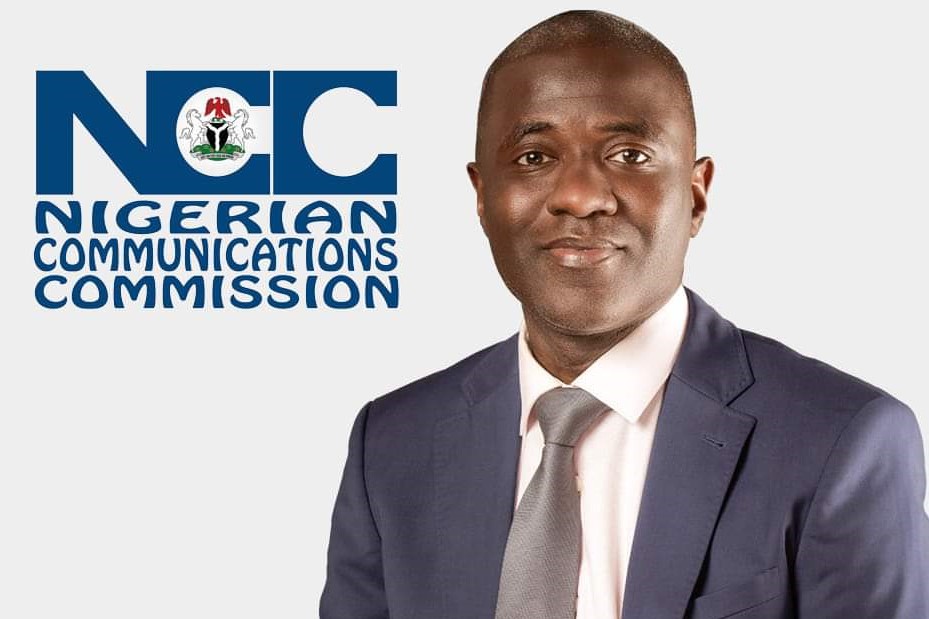
Smarting from its successful collaboration with the Central Bank of Nigeria (CBN) and launch of the launch of Telecommunications Identity Risk Management System (TIRMS) to track, verify, and mitigate risks associated with subscriber identity module (SIM) card fraud, number recycling, and other identity-related abuses, the Executive Vice Chairman/CEO, NCC, Dr Aminu Maida, said the Commission will extend the hand of collaboration to the Economic and Financial Crimes Commission (EFCC) and the National Identity Management Commission (NIMC).
Similarly, the Chief Justice of Nigeria (CJN), Hon. Justice Kudirat Kekere-Ekun, said regulatory agencies such as the NCC must take due cognisance of, and be guided by judicial decisions interpreting the laws within their regulatory domains.
According to her, telecom infrastructure now constitutes an essential foundation for commerce, governance, education, financial systems, and social engagement.
The CJN and Dr Maida spoke at the NCC-National Judicial Institute (NJI) Workshop for Justices and Judges on Legal Issues in Telecom with focus on: “Adjudicating in the Digital Era: The Judiciary’s Imperative in Connectivity, Infrastructure Protection and Online Safety”.
The Commission stressed the importance of safeguarding the integrity of telecommunication subscriber identities as digital transactions take firm foothold across the country.
“The rise in cybercrime, identity fraud, and financial scams linked to telecommunication services has become a major concern. In response, the Commission launched the Telecommunications Identity Risk Management System (TIRMS), to track, verify, and mitigate risks associated with SIM card fraud, number recycling, and other identity-related abuses.
“This Commission has already signed an MoU with the Central Bank of Nigeria to provide the financial services industry with enhanced visibility to effectively combat e-fraud, particularly those perpetuated using phone numbers. We will extend this collaboration to other stakeholders including the EFCC, NIMC, and other agencies in the fight against cybercrime while protecting honest consumers,” he said.
According to Dr Maida, Nigeria is firmly on the path of digital transformation. The rapid growth of digital payments, ecommerce platforms, startups, digital literacy, and the adoption of emerging technologies underscores the immense potential of our digital economy to drive innovation and expand opportunities.
“In the telecom space, the data usage also tells a compelling story: Nigerians are consuming data at unprecedented levels. In March 2026 alone, Nigerians consumed over 1.42 million terabytes of data, up from 995 thousand terabytes as of March 2025—that is about 45,800 terabytes every day. Put another way, this is roughly equivalent to Nigerians watching over 15 million hours of high-definition video every single day.
“By comparison, in March last year, daily data use was about 32,100 terabytes, equivalent to roughly 10.7 million hours of HD video per day. This means Nigerians are now using the equivalent of about 4.6 million more hours of HD video every day than they did a year ago.
“Our broadband access is also growing. Broadband penetration has risen from 47.70 per cent last year to 54.30per cent this year, meaning that more Nigerians are getting access to faster and better internet services.
“Telecom operators invested over $1 billion in network expansion in 2025 alone, adding thousands of new sites to improve coverage and service quality. These demonstrate both the sector’s resilience as well as its critical contribution to Nigeria’s economic growth and social cohesion,” he said.
Hon. Justice Kekere-Ekun averred that regulatory institutions exercising statutory powers are bound to take due cognisance of, and be guided by, judicial decisions interpreting the laws within their regulatory domains,
“As dependence on digital connectivity continues to expand, the legal questions arising from this transformation have become increasingly complex. Courts are now required to engage with issues that were, until recently, outside the traditional scope of adjudication. Matters involving digital communications, cyber-related disputes, infrastructure protection, online conduct, data governance, and regulatory oversight are steadily occupying a more prominent place within the judicial process.
“The Judiciary cannot remain detached from these developments. The law must respond to changing realities while preserving the principles that sustain justice and social order. This responsibility requires Judicial Officers to engage with emerging legal challenges thoughtfully, consistently, and with a clear appreciation of their wider implications.
“The issue of connectivity, in particular, extends beyond technological convenience. Access to reliable communication systems now affects economic participation, access to public services, financial inclusion, and the efficient functioning of institutions. Disruptions to communications infrastructure therefore carry significant consequences, not only for private entities but for society as a whole.
“Equally important is the growing concern surrounding the protection of critical digital infrastructure. Incidents involving vandalism, unlawful interference with telecommunications facilities, cyber threats, and disputes affecting infrastructure deployment continue to test existing legal and regulatory frameworks. These developments require judicial responses that are both legally sound and responsive to the operational realities of the sector.
“The question of online safety also presents difficult and evolving challenges. Courts increasingly encounter disputes involving digital fraud, online harassment, privacy violations, misinformation, and the misuse of digital platforms. Such matters often involve a delicate balancing of rights and interests, including freedom of expression, public safety, privacy, and regulatory enforcement. The exercise of that balance calls for careful judicial reasoning and a disciplined application of legal principles.
“Experience from other jurisdictions demonstrates the increasingly central role of the Judiciary in shaping the legal architecture of the digital age. Courts in the United Kingdom, India, the European Union, and South Africa have been called upon to interpret laws relating to data protection, digital communications, platform regulation, and cyber accountability. Their decisions continue to influence policy development, regulatory practice, and public confidence within the digital ecosystem.
“In Nigeria, the pace of technological expansion makes judicial preparedness particularly important. As digital systems become more deeply integrated into everyday life, the courts will continue to confront disputes that require both legal precision and technological awareness. The Judiciary must therefore remain equipped to address these issues with intellectual rigour, consistency, and fidelity to the Rule of Law.
“At the same time, it must be clearly recognised that the responsibility for strengthening governance within specialised sectors of the digital economy is not borne by the Judiciary alone. Regulatory institutions like the NCC exercising statutory powers are equally bound to take due cognisance of, and be guided by, judicial decisions interpreting the laws within their regulatory domains. In a constitutional democracy governed by the Rule of Law, judgments of courts are not merely advisory opinions; they constitute authoritative statements of the law and form an essential framework within which regulatory discretion must operate.
“While Judicial Officers are rightly encouraged to deepen their understanding of sector-specific technical issues, regulators must correspondingly ensure institutional familiarity with court decisions affecting their mandates.
Regulatory actions that evolve in harmony with judicial interpretation promote legal certainty, minimise regulatory conflict, reduce litigation, and strengthen public confidence in both regulatory agencies and the justice system. Sustainable sectoral development therefore depends upon a relationship of mutual institutional respect; one in which courts interpret the law with independence, and regulators implement policy in faithful conformity with those interpretations.
“At the same time, it must be clearly recognised that the responsibility for strengthening governance within specialised sectors of the digital economy is not borne by the Judiciary alone.
“Regulatory institutions like the NCC exercising statutory powers are equally bound to take due cognisance of, and be guided by, judicial decisions interpreting the laws within their regulatory domains. In a constitutional democracy governed by the Rule of Law, judgments of courts are not merely advisory opinions; they constitute authoritative statements of the law and form an essential framework within which regulatory discretion must operate,” the CJN said.
Dr Maida said as digital transformation of Nigeria takes shape, there is no doubt that the judiciary has a pivotal role to play in shaping its future, ensuring that it remains innovative, secure, inclusive, and firmly rooted in the rule of law.
Despite all these, the progress that has been made by our sector is under constant threat.
The theme of this workshop rightly highlights the Judiciary’s imperative in three critical areas: connectivity, infrastructure protection, and online safety.
“Telecom infrastructure has now been officially designated by President Bola Ahmed Tinubu GCFR as Critical National Information Infrastructure—this means that assets of the telecommunications sector are to be provided a whole-of- government and whole-of-society protection, given their crucial importance to our daily lives. Despite this, we continue to witness disturbing levels of vandalism, fibre cuts, theft of equipment, and sabotage that disrupt services for millions of citizens and compromise national security.
“The Commission is working closely with security agencies, operators, and other stakeholders to intensify protection measures, including nationwide asset mapping, increased collaboration, advocacy and public sensitization campaigns, mediation, and stronger enforcement in line with the Presidential Order on Critical National Information Infrastructure. Our collaboration with the Office of the National Security Adviser (ONSA) has recorded some successes including the disruption of syndicates involved in the theft and resale of telecom equipment.
“Furthermore, the explosion of internet usage has brought with it serious challenges of online harms — including misinformation, hate speech, child exploitation, data privacy breaches, and other cybersecurity threats. The Commission has strengthened its regulatory frameworks with the review of the Internet Code of Practice, to promote responsible internet governance. Our goal is to strike the right balance between encouraging innovation and investment on one hand and protecting citizens, especially vulnerable groups, on the other.
“My Lords, as judges, you are increasingly being called upon to interpret laws, adjudicate disputes, and set precedents that will determine how these complex issues are resolved.
“Your decisions will influence regulatory certainty for investors and the overall trust in our digital ecosystem. This workshop therefore provides a unique platform for knowledge sharing, experience exchange, and deeper understanding of the technical, regulatory, and security dimensions of the telecommunications sector,” Dr Maida said.
Also speaking on the occasion, Administrator, NJI, Hon Justice B.A. Adejumo, said globally, connectivity has become fundamental to human existence, shaping industrial interests, socio-economic progress, national stability, and digital autonomy.
“Yet, as we face profound privacy vulnerabilities, surveillance concerns, misinformation, and algorithmic biases, alongside threats like identity theft and cyberstalking, distinguishing between meaningful connection and digital exploitation is becoming increasingly complex. In this landscape, the Judiciary’s status as the Guardian of the Constitution and Custodian of the Rule of Law, remains inviolable.
“Consequently, the Bench plays a pivotal role in harmonizing the right to freedom of expression with the competing demands of privacy and security. Executing this delicate duty invariably requires a sophisticated grasp of the telecommunications environment, the precise interpretation of evolving statutes, and a continuous recognition of how intersecting rights influence Nigeria’s digital trajectory. This Workshop thus serves as a vital forum for analyzing these emerging complexities within the sector.
“Furthermore, while the Judiciary’s contribution is central, the necessity of inter-agency collaboration in safeguarding telecommunications infrastructure cannot be overstated. Deeper synergy between the NCC and other government bodies offers a potential remedy for persistent hurdles such as vandalism, fibre-optic damage, and the risks inherent in Over-the-Top (OTT) services and the Internet of Things (IoT). Establishing a resilient and secure digital framework is, ultimately, a shared endeavor,” he said.