
The Nigerian Upstream Petroleum Regulatory Commission (NUPRC) has said the 2026 Licensing Round will commence in the third quarter (Q3) of the year. This is consequent on the granting of approval by the Minister of Petroleum Resources in line with the Petroleum Industry Act (PIA) 2021.
The Commission Chief Executive, Mrs. Oritsemeyiwa Eyesan, stated this when Meren Energy (formerly Africa Oil), visited the corporate headquarters of the NUPRC in Abuja, yesterday.
A signed statement by the NUPRC’s Head of Media and Corporate Communications, Eniola Akinkuotu, explained that Eyesan expressed satisfaction with the conduct of the 2025 Licensing Round so far, adding that the commercial bid would take place in July after which the next licensing round would commence.
The Federal Government hopes to attract upwards of $10 billion of upstream investment from the process. Besides, the volume of oil blocks put up for sale reinforces the determination of the government to further boost the country’s crude oil production output even as it targets to hit 2.2 million barrels of oil production daily, and simultaneously aiming to revive underutilised oil blocks that have been inactive or unexplored.
If attained, this will be a huge leap from the present production capacity which has been hovering around 1.5mbpd to 1.8 mbpd.
The NUPRC boss said the heightened participation in the 2025 Licensing Round was a testament to the fact that Nigeria was headed in the right direction.
She said the rise in investments coupled with the upswing in production was evidence that Nigeria’s oil and gas sector under the leadership of President Bola Tinubu had become attractive.
“We are also fortunate that the President and Minister of Petroleum Resources has approved the 2026 Licensing Round. So, we are in the process of finalising the 2026 launch which will happen latest by the third quarter. So, this is the make or break point and we want to make sure we make it,” Eyesan said.
The licencing process, which was announced last December, has about 300 firms jostling for the 50 oil blocks put out in the licensing rounds, a feat the Commission prides as revealing the juicy investment opportunities in the country, and reinforcing the firm believe that the industry’s story will change rapidly for the better. The 50 blocks on offer are coming at a reduced signature bonuses ranging from $3 million to $7 million. In 2024 licencing round, signature bonus went for as high as $10 million. The present reduction is aimed at boosting investors’ interest.
The licencing round is divided into five stages, including pre-qualification, technical and commercial bid evaluations. The blocks on offer are a mixture of developments, including 19 shallow-water, 15 onshore, 15 frontier, and one deepwater block. As an incentive to further attract investors, the federal government agreed to a drastic reduction of signature bonus and other entry barriers. A signature bonus is the one-time, upfront payment that an oil or gas company pays to government when it wins a licence or lease to explore or produce petroleum resources.
In his remarks, the Group CEO, Meren Energy, Dr. Oliver Quinn, stated that the current reforms had inspired the company to increase its investments in Nigeria hence its interest in asset divestments and licensing rounds.
Quinn revealed that Meren Energy’s investment priority is Africa of which Nigeria ranks is number one.
“We have operated in Agbami, Akpo and Egina world class fields. I think till date, in 20 years about $11billion in capital from our side has gone into these assets and about $4b has gone to tax and royalties,” he said, adding that “Nigeria remains the core of our business today because of the quality of these assets.”
According to Quinn, Meren Energy is pressuring its partners on these assets to deepen their investments and then increase overall production.
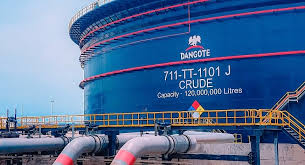
He said his firm was the first company in Nigeria to sell crude oil to the Dangote Refinery and the firm will continue to fulfill its Domestic Crude Supply Obligation (DCSO) so long as the price remains right.
The Nation