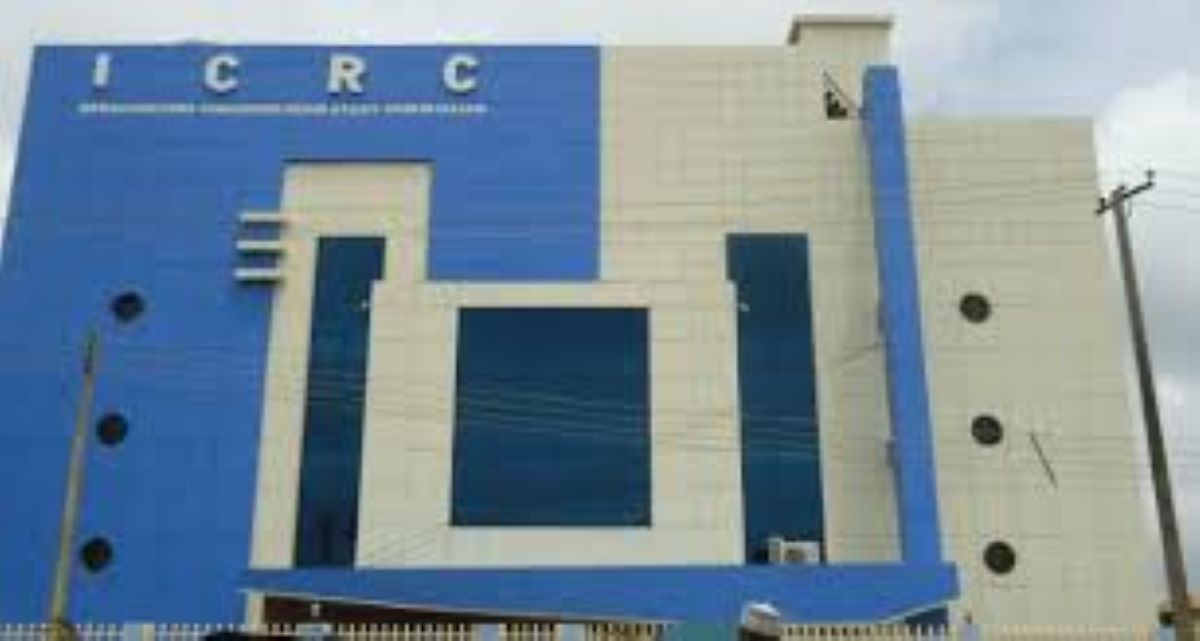
Nigeria will require about $100 billion in yearly investments over the next 17 years to bridge existing infrastructure gap in the country estimated to be about $2.3 trillion, the Infrastructure Concession Regulatory Commission (ICRC) has said.
Its Director-General and Chief Executive Officer, Dr. Jobson Oseodion Ewalefoh, who spoke in Abuja during a one-day stakeholders’ engagement on the Model Public-Private Partnership (PPP) Agreement for Ministries, Departments and Agencies (MDAs) of the Federal Government, said the huge infrastructure gap is reflected in unfinished roads, inadequate electricity supply, limited railway networks, insufficient hospitals, poor water systems and weak digital infrastructure that continue to affect millions of Nigerians.
He said the size of the funding requirement makes it impossible for government budgets alone to finance the country’s infrastructure needs.
He said: “$2.3 trillion is the conservative estimate of Nigeria’s infrastructure deficit today. To close that gap by 2043, Nigeria must mobilise approximately $100 billion every year. Government revenue alone, even under the most disciplined fiscal management, cannot bear that weight.”
Ewalefoh explained that this reality informed the decision of the President Bola Tinubu’s administration to make Public-Private Partnerships (PPP) a major part of its development strategy by attracting private sector funding, expertise and innovation into critical infrastructure projects.
He said the ICRC had spent nearly two years developing a Model PPP Agreement that would provide a standard framework for government agencies instead of negotiating every concession agreement from the beginning.
According to him, Nigeria’s previous project-by-project approach often resulted in inconsistent contract terms, lengthy negotiations, legal disputes and reduced investor confidence.
“For nearly two decades, definitions, risk allocation, default clauses and dispute mechanisms were repeatedly reinvented, leaving Nigeria exposed and investors uncertain,” he said.
He noted that the new agreement was developed after reviewing existing concessions, consulting legal and financial experts, studying international best practices and engaging government agencies, investors and lenders.
The ICRC boss described the document as a “living instrument” that would continue to evolve based on practical experience, changes in Nigerian laws and global standards.
He stressed that the agreement was not intended to replace legal advice or project-specific negotiations but would instead provide a reliable national framework that would make transactions faster and more predictable.
“What the Model Agreement provides is a dependable point of departure, a shared national baseline grounded in Nigerian law, disciplined risk allocation and global good practice, from which every MDA can negotiate with greater speed, security and sophistication,” he said.
Ewalefoh explained that the agreement assigns risks to the parties best equipped to manage them and includes clear provisions on insurance, force majeure, changes in law, defaults and contract termination.
He added that it also protects project financiers through direct agreements that give lenders the right to step in and address problems before projects are terminated.
On dispute resolution, he said the framework encourages consultation and negotiation before moving to confidential intervention by the ICRC and, where necessary, arbitration in Abuja under the Arbitration and Mediation Act, 2023.
According to him, the agreement also establishes contract management systems, performance monitoring, reporting obligations, audit rights and periodic reviews to ensure long-term projects remain effective throughout their lifespan.
He said anti-corruption and ethical standards were integrated into every aspect of the document to promote transparency and accountability.
“The philosophy is simple: predictability for government, protection for investors and performance for the Nigerian public, which remains the ultimate purpose of our work,” he stated.
Ewalefoh said the framework would reduce transaction costs, shorten the period required to reach financial close and strengthen Nigeria’s position during negotiations with private investors.
He urged ministries and agencies to study the agreement carefully, engage competent legal and financial advisers when adapting it to specific projects and submit revised versions to the ICRC for statutory review.
Looking ahead, he said a standardised PPP framework would improve Nigeria’s ability to attract cheaper financing from local and international investors.
He noted that the country’s recent removal from the Financial Action Task Force (FATF) grey list had renewed investor interest and said the new agreement could help convert that interest into long-term infrastructure investments.
“In global finance, reputation is pricing. This document constitutes reputational infrastructure every bit as vital as the roads, rail lines and airports it will help finance,” he said.
He added that the agreement would also support alternative funding sources such as pension funds, Sukuk, green bonds and blended finance by providing greater certainty for investors.
The ICRC chief called on directors and PPP desk officers across government institutions to champion the framework and contribute to building a more credible and bankable PPP ecosystem.
“The ICRC stands ready as your partner, not your gatekeeper. Every great infrastructure project begins with words on paper: a contract, a clause and a sound allocation of risk and responsibility. The document we unveil today is that foundation, strengthened, fairer and equal to the scale of Nigeria’s infrastructure ambition,” he said.
In her goodwill message, the Solicitor-General of the Federation and Permanent Secretary of the Federal Ministry of Justice, Mrs. Beatrice Jedy-Agba, expressed confidence that collaboration among the ICRC, ministries, development partners and investors would help reduce Nigeria’s infrastructure deficit.
She described the development of the Model PPP Agreement as the outcome of extensive consultations involving legal experts and stakeholders across the country.
According to her, the engagements were aimed at creating a framework that promotes accountability, value for money, stronger investor confidence and adequate protection of the public interest.
Jedy-Agba acknowledged the complexity of long-term infrastructure contracts and said the Ministry of Justice had continued to strengthen its institutional capacity and specialised expertise to ensure government interests are properly protected.
“Our goal is to ensure that deeper specialisation and the new legal framework enable us to review complex PPP contracts effectively while safeguarding the Federal Government against unnecessary liabilities and litigation,” she said.
She urged stakeholders to actively participate in refining the document through constructive feedback, saying the framework should remain practical, responsive and suited to Nigeria’s realities.
“I urge you to engage actively, challenge assumptions and contribute creatively. Together, we can shape the framework that will serve as the cornerstone for future infrastructure programmes and strengthen partnerships built on trust for the prosperity and well-being of our citizens,” she added.
The Nation